Driving Instructor Insurance in a time of regulatory disruption: a risk-based perspective
Published on: November 26, 2025
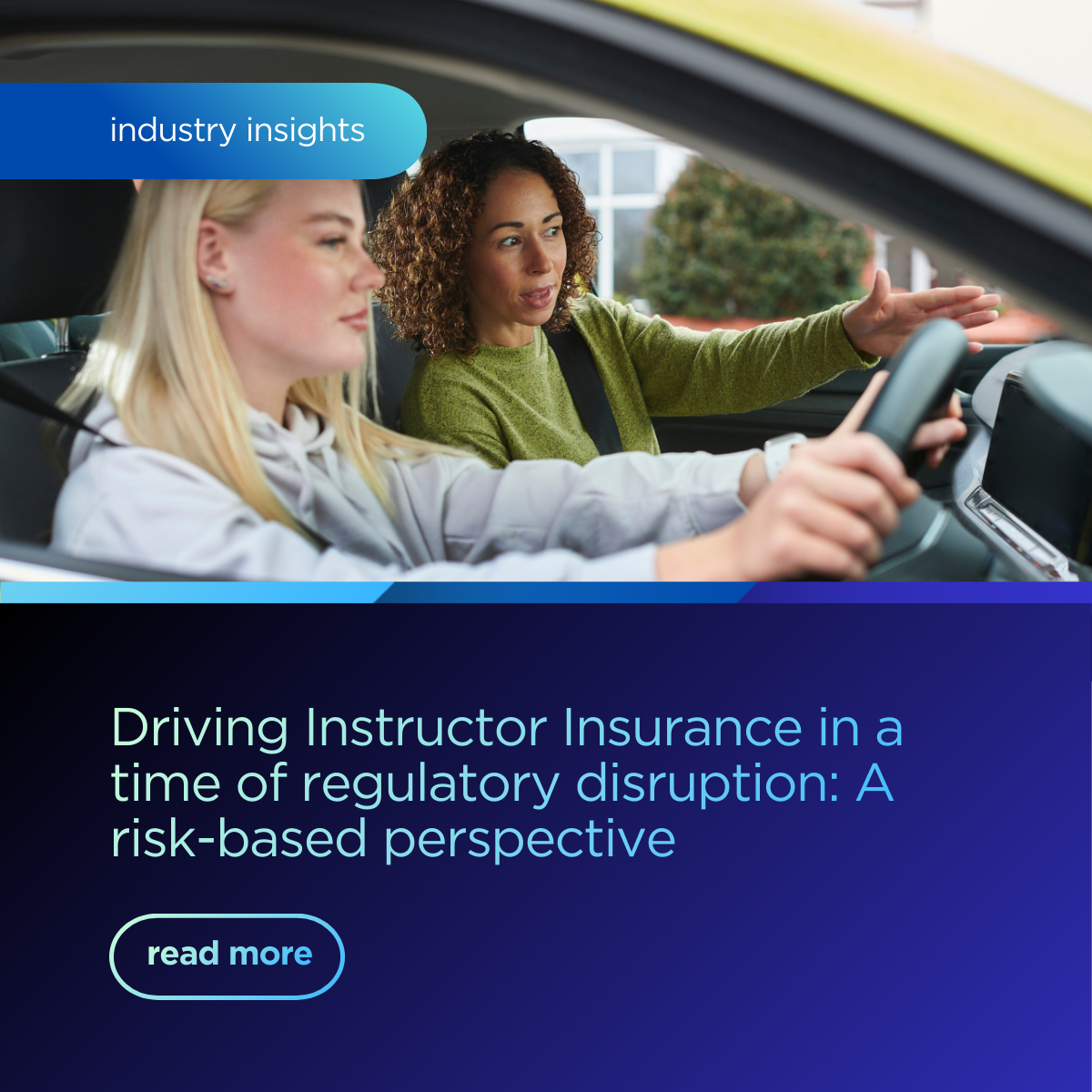
The UK’s driving instruction sector is facing major regulatory upheaval. In response to a growing backlog of driving tests, the Driver and Vehicle Standards Agency (DVSA) has diverted resources away from routine oversight of instructors. While this may seem temporary, the insurance implications are significant.
Standards check delays: underwriting concerns
DVSA reports that 81% of test centres now have maximum waiting times of 24 weeks, with the national average at 22 weeks – up from 14 weeks earlier in 2024 [1]. This has led to widespread delays or suspension of ADI standards checks, which assess instructional competence.
Without recent checks, instructors may remain on the register without validation. In the event of a claim – especially one alleging negligent instruction – insurers may face higher legal costs defending instructors whose last check is outdated, increasing the risk of contested liability.
Badge lapses and registration gaps
Parliamentary data shows thousands of ADIs leave or lapse from the register annually [2]. If an ADI’s badge expires, they are legally barred from charging for lessons. Teaching without a valid badge can:
- Invalidate motor insurance
- Lead to rejected claims
- Expose instructors to personal liability for injury or damage
Insurers now closely examine DVSA registration status during claims. Even administrative lapses can result in non-payment under motor and liability policies.
PDIs and part 3 test delays: insurance vulnerabilities
The backlog also affects Potential Driving Instructors (PDIs). NASP reports DVSA now receives around 700 trainee licence applications monthly – up from 250 pre-pandemic – with over 4,000 trainees joining in the past year [3].
However, examiner shortages have caused severe delays in scheduling Part 3 tests, the final step to becoming a qualified ADI. Between September 2023 and February 2024, only 4,637 Part 3 tests were conducted [3].
This creates critical insurance risks for PDIs:
- Trainee licences are time-limited, with only three test attempts allowed within two years. Delays may force PDIs out of the profession.
- PDI insurance policies depend on holding a valid trainee licence and being actively supervised. If the licence expires, cover lapses, leaving instructors uninsured.
- Teaching without valid insurance or licence can lead to legal penalties and personal liability.
Insurers advise PDIs to document all test booking attempts and notify brokers if nearing licence expiry without a confirmed test date. Some providers may offer extensions, but these must be arranged proactively.
Professional indemnity and crisis management
Though not legally required, professional indemnity insurance is increasingly recommended for ADIs. It can cover:
- Allegations of negligent instruction
- Incorrect advice on DVSA procedures
- Training errors or omissions
Some policies also include crisis management cover – advisable in the social media age. A single negative incident, especially one linked to a missed standards check, can damage an instructor’s reputation and income.
DVSA’s 7-point plan
To address the backlog, DVSA launched a 7-point plan in late 2024:
- Recruit and train 450 new examiners
- Redeploy staff to conduct tests full-time
- Extend cancellation notice periods
- Crack down on booking system abuse
- Triple the number of Part 2 and 3 tests
- Deploy specialist ADI examiners
- Offer discretionary extensions for PDIs nearing qualification expiry
Recently, amid ongoing internal pressures and the resignation of CEO Loveday Ryder, the DVSA has announced a new partnership with the Ministry of Defence, deploying 36 military examiners to help tackle the driving test backlog.
Risk mitigation recommendations
Given the current uncertainty, driving instructors should take the following steps to help protect themselves:
- Maintain continuous insurance, considering professional indemnity and public liability
- Regularly verify badge and registration status with DVSA
- Document training activities and pupil progress
- Work with specialist brokers familiar with PDI and ADI risks
Conclusion
The DVSA’s operational challenges are creating ripple effects beyond test centres. For driving instructors, the insurance risks are real and potentially severe. As regulations evolve, robust insurance and proactive risk management are highly advisable. Timely communication with brokers can help ensure continuity of cover and reduce exposure – especially while the DVSA works to resolve the backlog.
Sources:

Quote Me Today are now Cyber Essentials Plus Certified
We're investing in cyber security so you can feel confident your data is in safe hands.